Frequently Asked Questions
STILL NOT SURE?
Everything You Need To Know About Going Solar
Thinking about switching to solar? You're not alone. Many homeowners have questions about how it works, the costs, and whether it’s really worth it. Below, we’ve answered the most common questions we hear to help you make the right decision—without the confusion or sales pressure.
Question 1: “Does solar really save me money, or is it just a gimmick?”
Yes, solar absolutely saves money—when it’s done right. The key is proper system design and financing. We ensure your system is sized correctly, so your solar payment is lower than what you currently pay for electricity. Plus, utility rates keep increasing, while solar lets you lock in a lower rate and eliminate surprise costs.
Question 2: “How much does solar cost?”
There’s no one-size-fits-all answer. Here’s the truth:
Most homeowners pay nothing upfront and replace their electric bill with a lower, fixed solar payment.
The cost depends on your energy usage, home size, and financing choice.
Huge incentives are available to help offset costs.
Our job is to make sure the numbers work for you. We’ll break it down clearly—no pressure, no confusion.
Question 3: “What if I go solar and still have an electric bill?”
If your solar system is designed correctly, your electric bill should be minimal or eliminated entirely. Some homeowners still get an electric bill if:
Their system wasn’t sized correctly for their energy needs.
Their consultant didn’t account for seasonal usage changes.
Their consultant didn't account for future usage changes.
Their consultant didn't offer enough batteries to store their produced energy.
We make sure none of that happens. Our approach ensures your system covers your actual usage, so you’re not stuck with surprises.
Question 4: “Will solar increase my home’s value?”
Yes! Homes with solar sell faster and for more money. Studies show:
Solar-powered homes sell 4.1% faster than homes without solar.
Homeowners recover an average of $15,000 or more in home value.
Solar is an investment that pays you back, even if you sell.
Question 5: “What happens if my system stops working? Who do I call?”
Your system is backed by warranties, ongoing support, and direct access to us. Many companies disappear after installation—we don’t. If something happens, you can call us directly and we’ll help you resolve the issue.
Question 6: “Do I need a battery for my solar system?”
A battery isn’t required with some Utility Companies, however it is dependent of their Net Energy Metering Agreement, but it’s recommended if you want backup power during outages or to maximize savings during peak rate times.
With battery storage, you can:
Keep essential appliances running during blackouts.
Store excess solar power for use at night.
Gain more energy independence from the grid.
Maximize Savings during peak rates
We’ll help you decide if a battery makes sense for your needs.
Question 7: “How long does the installation take?”
The physical installation usually takes 1-3 days, but the entire process (permits, approvals, installation) typically takes 4-8 weeks. We handle all permitting and approvals for you to keep things moving fast.
Question 8: “What happens if my roof needs repairs?”
If your roof needs repairs before going solar, we’ll assess it and provide recommendations. If your roof is in good shape, your solar system will actually help protect it by shielding it from the elements.
Question 9: “Will solar damage my roof?”
No—when installed correctly, solar panels won’t damage your roof. Our team follows strict installation guidelines and provides a roof penetration warranty for peace of mind.
Question 10: “What if I don’t plan to stay in my home long-term?”
Solar still makes sense—even if you move. Here’s why:
If you own your system with a loan, you can include it in the price of the home when selling.
You can also transfer the loan or service agreement to the new homeowner—your lender or PPA company helps facilitate that process to make it easy.
What’s even better? They’ll sell the benefits of solar to the buyer for you, showing them how it saves them money compared to staying with the utility company.
“What if the buyer doesn’t want it?”
That’s highly unlikely and not a genuine concern. Why? Because:
Your real estate agent markets your home to buyers who want solar—not buyers who don’t.
Homes with solar sell faster and for more money because buyers recognize the savings.
If buyers didn’t want solar, they’d compete for homes with rising energy costs instead.
Bottom line? Solar makes your home more attractive, not more challenging to sell.
Question 11: “Are there incentives or tax credits for going solar?”
Yes! Many homeowners qualify for federal, state, and local incentives that can cover a significant portion of the cost. We help you:
Claim the Federal Solar Tax Credit (up to 30%).
Find local rebates & incentives specific to your area.
Maximize savings with net metering and other utility programs.
Question 12: “What is net metering, and how does it work?”
Net metering allows you to send excess solar energy to the grid in exchange for credits. This means:
During the day, your panels produce more energy than you use.
That excess energy is sent to the grid, and you earn credits.
At night, you pull power from the grid using your credits.
It’s like banking your extra solar power for later use!
Question 13: “What if I just wait a few more years?”
Waiting costs more than acting now. Here’s why:
Utility rates keep rising—the longer you wait, the more you lose.
Incentives won’t last forever—many tax credits and rebates are decreasing.
Solar prices may increase due to supply chain issues.
The sooner you go solar, the sooner you start saving.
Question 14: “How do I know I’m choosing the right solar company?”
Not all solar companies are the same. Here’s what sets us apart:
We focus on proper system design so you get actual savings, not just panels on your roof.
We don’t use high-pressure sales tactics. Our goal is to educate, not push.
We will stay with you after installation so you have long-term support.
We’ve also fixed over 200 systems for homeowners who got a lousy deal elsewhere. We do solar the right way.
Still Have Questions? Let’s Talk!
Book A Call So We Can Help!
Schedule a quick call today, no pressure, just real answers.
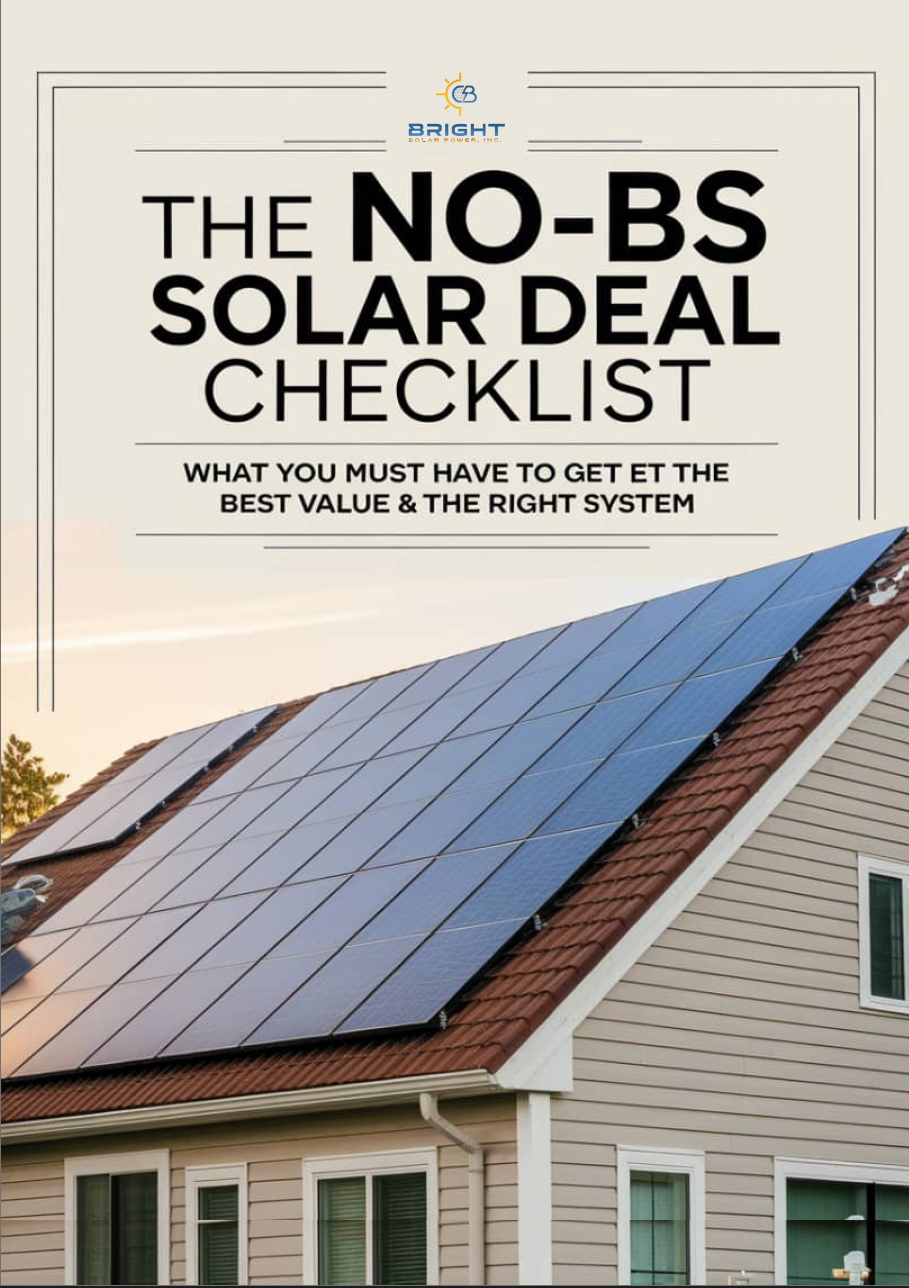
Get the No-BS Solar Checklist & Avoid Costly Mistakes
Homeowners: Discover What You NEED to Know Before Getting Solar
Most homeowners make critical mistakes when shopping for solar, often getting oversized systems, misleading pricing, or poor-quality installations. Don’t fall into the same traps!
With over a decade of experience, I’ve assembled the ultimate solar checklist to ensure you get the right system at the best value—without the gimmicks.
Follow Us!
